
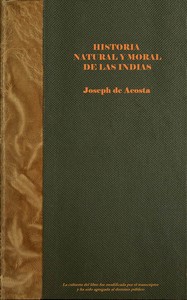
Historia natural y moral de las Indias (vol. 1 of 2) by José de Acosta
Published in 1590, this isn't a novel with a plot in the usual sense. Think of it as a massive, organized field report from a deeply curious and conflicted man. Acosta structures his observations into two main parts: the 'Natural History' and the 'Moral History.'
The Story
The first half is all about the land itself. Acosta describes the staggering geography of the Americas—the Andes mountains, the huge rivers, strange animals like the armadillo, and weather patterns that defied European logic. He asks practical questions: Why is it cold on the equator in the Andes? How do volcanoes work? His answers mix sharp observation with the limited science of his day.
The second half focuses on the people. Here, Acosta documents the customs, governments, religions, and histories of the Inca and Aztec empires. He records their achievements in engineering, agriculture, and astronomy with a scholar's respect, even as he condemns their religious practices from his Jesuit perspective. The 'story' is the collision of these two worldviews on the page.
Why You Should Read It
You read this not for a tidy narrative, but to get inside the head of the 16th century. Acosta's voice is the book's greatest strength. You feel his genuine wonder at new animals and his frustration when things don't fit his framework. His attempts to explain Indigenous origins are fascinatingly wrong, showing the limits of knowledge at the time. It’s also crucial, and often uncomfortable, reading because it lays bare the intellectual foundations of colonization—the belief system that justified everything that followed. You see the seeds of both cultural appreciation and devastating prejudice planted side by side.
Final Verdict
This is a challenging but rewarding book for a specific reader. It's perfect for history buffs who want a primary source that's more reflective than a conquest chronicle, or for anyone interested in the history of science and how we try to make sense of the unfamiliar. It’s not a light read—the language is old and the ideas are dense—but it offers a raw, unfiltered look at the birth of the modern global perspective. If you’ve ever read later naturalists like Humboldt and wondered 'what came before?', this is your answer.
Noah Ramirez
3 months agoHonestly, the clarity of the writing makes this accessible. Don't hesitate to start reading.




David Jones
1 year agoHonestly, the clarity of the writing makes this accessible. Absolutely essential reading.