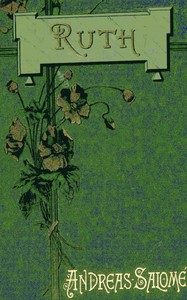
Ruth : Erzählung by Lou Andreas-Salomé
Lou Andreas-Salomé was a force of nature in intellectual circles, a friend to Nietzsche and Rilke, and a brilliant thinker in her own right. Her novel Ruth, first published in 1895, is a fascinating and often overlooked gem. It’s not a plot-heavy adventure, but a sharp, psychological portrait that feels surprisingly modern in its concerns.
The Story
The story is told from the perspective of a man who values reason above all else. He’s built a life of study and solitude, proud of his independence and emotional control. His orderly world is disrupted when his brother asks him to take in his wife, Ruth. She is young, recovering from an illness, and carries an air of silent melancholy. She moves into his home not as a guest, but almost as a passive observer. The narrator, expecting to be the wise benefactor, finds himself unnerved. Ruth doesn’t argue with his ideas; she simply exists beside them. Her quiet suffering and innate goodness begin to act like a solvent on his cold logic. The central drama is internal: watching a man who believes he has all the answers slowly realize his philosophy has no room for simple, human compassion.
Why You Should Read It
I was completely drawn into this quiet clash of worlds. Andreas-Salomé writes with incredible precision about the male ego and the limits of intellectualism. The narrator isn’t a villain; he’s just painfully, recognizably human in his self-deception. You watch him tie himself in mental knots trying to analyze Ruth, to fit her into his system, and it’s both frustrating and compelling. Ruth herself is less a full character and more a catalyst—a silent question mark that exposes the emptiness in a life lived only in the head. The book asks: what good is a brilliant mind if it’s walled off from the heart? It’s a short read, but it packs a punch because the conflict is so intimate and real.
Final Verdict
This book is perfect for readers who love character-driven, psychological fiction. Think of it as a 19th-century precursor to novels that explore isolation and connection. If you enjoyed the interiority of a book like The Stranger or the tense, quiet dynamics in novels by Penelope Fitzgerald, you’ll find a lot to appreciate here. It’s also a must-read for anyone interested in feminist literary history, offering a brilliant female gaze on male intellectualism. Don’t go in looking for a fast plot. Go in ready for a thoughtful, slightly unsettling, and beautifully written character study that questions where true wisdom really lives.